The Role of Technology in Sales Coaching for B2B Teams
Discover the role of technology in sales coaching. Learn how AI and data analytics enhance B2B sales rep performance and close more deals.
Published: July 3, 2026
Author: OffBook Editorial Team

Technology in sales coaching is defined as the use of AI, data analytics, and digital tools to personalize, scale, and improve how sales reps develop their skills and close deals. The role of technology in sales coaching has moved well beyond recording calls and logging CRM notes. AI-augmented sales teams now close 31% more deals than teams relying on traditional CRM setups alone. That gap is not a rounding error. It represents a structural shift in how top B2B sales organizations build rep capability, run coaching cycles, and drive revenue. This article breaks down exactly how that shift works, where technology helps most, and where human judgment still wins.
How does technology transform traditional sales coaching?
Traditional sales coaching runs on memory and instinct. A manager sits in on a call, takes notes, and shares feedback days later. By then, the moment is gone and the rep has already moved on to the next deal.

AI changes the feedback loop entirely. Conversation intelligence tools analyze call recordings, CRM data, and customer interactions to surface specific coaching cues. They flag where a rep talked too much, missed a qualification question, or failed to handle a pricing objection. That kind of granular, repeatable analysis is beyond what any manager can do manually across a full team.
The impact on pipeline is measurable. AI adoption reduces non-selling tasks from 72% to under 40%, accelerating pipeline velocity by 40–60% and improving close rates by 20–30%. Reps spend less time on list building and CRM logging, and more time in actual conversations.
Sales teams using AI-enabled conversation intelligence conduct manager coaching based on actual call data rather than anecdote. New reps ramp faster because feedback is tied to specific moments in real calls, not general impressions. The coaching becomes evidence-based, which makes it easier to repeat and scale.
Pro Tip: Map your top rep’s call patterns using conversation intelligence before building your coaching playbook. Their actual behavior, not their stated technique, is your best training data.
What role do AI simulations play in sales skill development?
Sales coaching has historically suffered from a practice problem. Reps learn methodology in training, then apply it cold on live calls with real buyers. There is no equivalent of the flight simulator that pilots use before they ever touch a commercial aircraft.
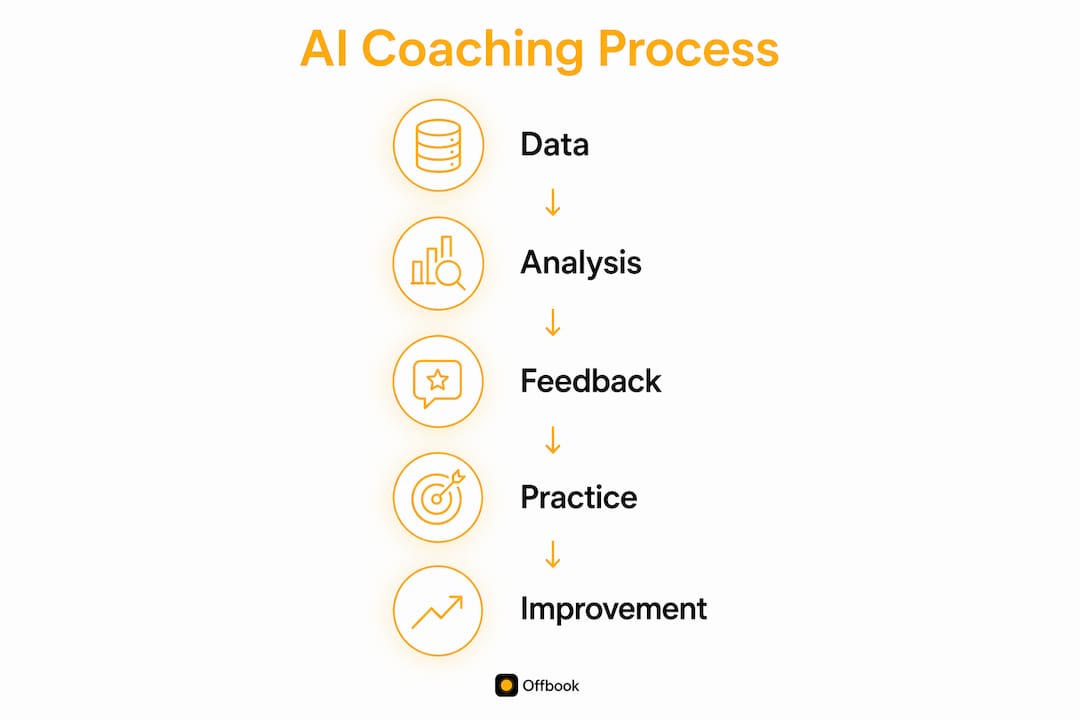
AI-powered role-play environments fix that gap. AI avatars enable continuous on-demand practice, improving conversational readiness and accelerating learning curves in ways that scheduled live sessions cannot match. A rep can run a cold objection scenario at 10 PM on a Tuesday without needing a manager or a practice partner.
The specific benefits of simulation-based practice include:
- Objection handling repetition. Reps can face the same objection dozens of times until their response is natural, not rehearsed-sounding.
- On-demand availability. Practice happens when the rep needs it, not when a calendar slot opens up.
- Immediate feedback loops. AI simulations provide instant feedback on pacing, question quality, and talk-to-listen ratio.
- Scenario variety. Reps can practice enterprise deals, SMB calls, procurement pushback, and multi-stakeholder conversations in the same session.
- Reduced pressure. Mistakes in simulation carry no cost, which encourages reps to try approaches they would avoid on live calls.
AI-powered role-playing creates realistic environments where repeated practice builds the muscle memory needed for difficult sales conversations. The analogy to surgical simulation is apt. Surgeons do not practice new procedures on patients. Sales reps, historically, have had no choice but to do exactly that.
How should you embed tech into existing sales workflows?
Technology fails in sales coaching when it sits outside the workflow. A tool that requires a rep to toggle between their CRM, a coaching platform, and a call recorder creates friction. Friction kills adoption. Low adoption means the investment produces nothing.
The fix is integration. Integrating AI coaching tools fully into primary CRM workflows increases both adoption and manager efficiency. When coaching insights surface inside the system reps already use, behavior change follows naturally. When they live in a separate tab, they get ignored.
Follow these steps to embed technology without creating tool sprawl:
- Audit current rep workflows. Identify where reps spend time and where handoffs between tools create friction or data loss.
- Map coaching touchpoints. Pinpoint the moments in a deal cycle where a coaching cue would change rep behavior, such as discovery calls, pricing conversations, and multi-stakeholder demos.
- Choose tools that integrate natively. Prioritize platforms that connect directly to your CRM rather than requiring manual data export or separate logins.
- Assign a workflow owner. Designate one person responsible for maintaining the integration and monitoring adoption metrics.
- Reinvest saved time deliberately. AI tools save sales professionals 4.8 hours weekly, but 72% of organizations fail to redirect that time into high-value activities. Teams that do reinvest it are 2.2x more likely to exceed customer growth goals.
Pro Tip: Before adding any new tool, ask one question: does this live inside the workflow my reps already use every day? If the answer is no, the adoption rate will tell you that within 30 days.
For a practical framework on avoiding integration mistakes, the sales AI integration best practices guide from MediaBloom covers CRM alignment and workflow design in detail.
Why human coaching still matters in an AI-driven sales environment
AI is a powerful diagnostic tool. It is not a motivator, a mentor, or a judge of character. The distinction matters more than most sales leaders acknowledge.
AI sales coaching tools excel at identifying individual strengths and gaps. Human coaches provide the nuance needed to understand traits like resilience, drive, and coachability. A rep who scores well on talk-to-listen ratio but consistently folds under pricing pressure has a confidence problem, not a technique problem. AI flags the symptom. A good coach diagnoses the cause.
“AI provides the frame. Human insight adds the color. Without both, you are coaching a data point, not a person. The reps who grow fastest are the ones whose managers know how to read the AI output and then ask the right follow-up question in a one-on-one.”
The sequence also matters. Without a strong sales methodology foundation, technology adoption risks failure. Addressing foundational gaps before adding technology can boost results by 30% within one quarter. A team that does not understand MEDDIC or SPIN Selling will not benefit from an AI tool that tracks MEDDIC completion. The tool amplifies what is already there. If the foundation is weak, the amplification makes the weakness more visible, not less.
Human coaches also carry the relationship. They know which rep is going through a difficult quarter personally, which one needs a challenge rather than encouragement, and which one is ready for a stretch assignment. AI cannot hold that context. The best sales organizations treat technology as the analytical layer and human coaching as the interpretive and motivational layer. Neither replaces the other.
Key Takeaways
Technology in sales coaching produces the largest gains when AI-driven insights are paired with strong methodology and deliberate human coaching, not used as a substitute for either.
| Point | Details |
|---|---|
| AI closes the feedback gap | Conversation intelligence replaces anecdotal manager feedback with data tied to specific call moments. |
| Simulation accelerates ramp-up | AI role-play environments let reps practice objection handling on demand, without risking live deals. |
| Integration determines adoption | AI tools embedded in existing CRM workflows get used; standalone platforms get ignored. |
| Methodology comes before technology | Fixing foundational sales process gaps before adding AI can improve performance by 30% in one quarter. |
| Human coaching interprets what AI cannot | Resilience, drive, and coachability require human judgment to diagnose and develop. |
My take: the productivity paradox no one talks about
I have watched sales teams buy AI tools, celebrate the efficiency gains, and then wonder six months later why their numbers have not moved. The answer is almost always the same. They saved the time. They did not spend it better.
Gartner’s finding that 72% of organizations fail to reinvest AI time savings into high-value activities is the most underreported stat in sales technology. Every vendor leads with the hours saved. Nobody asks what happens to those hours. If they go back into email and internal meetings, the ROI is zero.
The teams I have seen get the most out of AI coaching tools share one habit. They treat the time AI frees up as a coaching budget. More one-on-ones. More call reviews with context. More deliberate practice sessions using simulation tools. The AI does the diagnostic work. The manager does the development work. That division of labor is what actually moves the number.
The other mistake I see constantly is buying technology before the methodology is solid. You cannot automate a process you have not defined. If your reps do not have a shared qualification framework, an AI tool that tracks qualification gaps will just surface confusion faster. Get the foundation right first. Then use technology to scale what works.
For teams thinking about how to scale coaching without adding headcount, the leverage is real. But it requires discipline about where the human time goes after the AI takes over the repetitive work.
— Neil
Offbook brings real-time AI coaching to your sales calls
Sales coaching that happens after the call is over changes the next call. Coaching that happens during the call changes the outcome of that one.
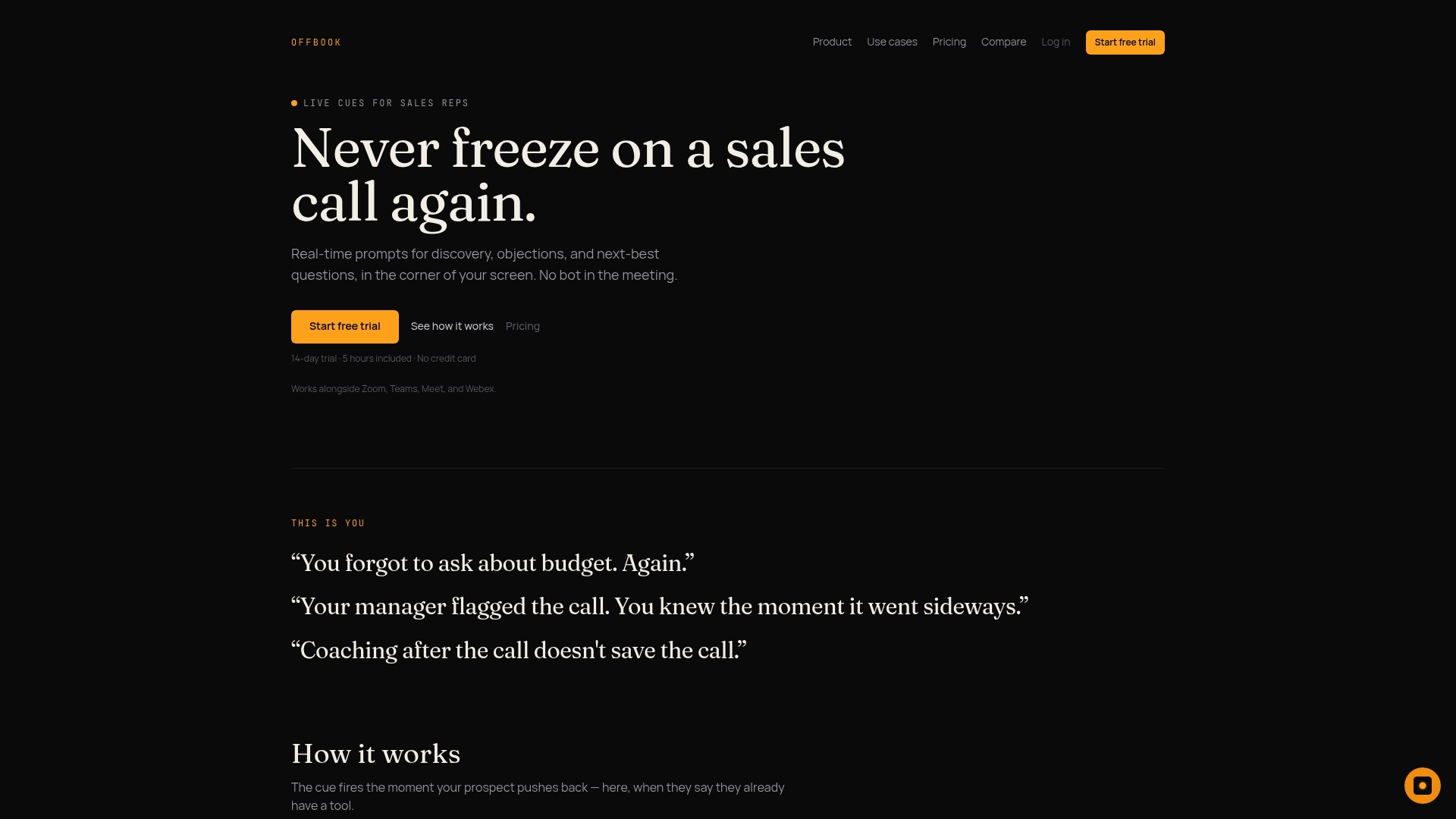
Offbook delivers live AI coaching for sales reps during video calls, surfacing on-screen prompts for the right questions to ask, objections to handle, and qualification gaps to close, all structured around MEDDIC and MEDDPICC. No bot joins the meeting. No one on the buyer’s side knows it is there. Offbook also generates pre-call briefs so reps walk into every conversation prepared. For B2B SaaS teams at the seed and Series A stage, it is the difference between coaching that happens in theory and coaching that changes deals in real time. See the full product overview to understand how it fits your team’s workflow.
FAQ
What is the role of technology in sales coaching?
Technology in sales coaching uses AI and digital tools to analyze rep performance, deliver real-time feedback, and enable on-demand practice. It scales coaching beyond what managers can provide manually and ties development to actual call data.
How does AI improve sales coaching effectiveness?
AI analyzes call recordings and CRM data to identify specific coaching gaps, replacing anecdotal feedback with evidence-based insights. Teams using AI-enabled conversation intelligence see faster rep ramp-up and measurable improvements in close rates.
Can AI replace human sales coaches?
AI cannot replace human coaches because it cannot assess traits like resilience, drive, or coachability. The most effective approach pairs AI diagnostics with human judgment to interpret data and motivate behavior change.
What is the biggest mistake in sales technology adoption?
The most common mistake is adding technology before establishing a solid sales methodology. Fixing foundational process gaps first can improve performance by 30% within one quarter, giving AI tools something proven to scale.
How do AI simulations help sales reps improve faster?
AI-powered role-play environments let reps practice difficult conversations repeatedly on demand, with immediate feedback on technique. That repetition builds the conversational confidence that live calls alone cannot develop fast enough.